
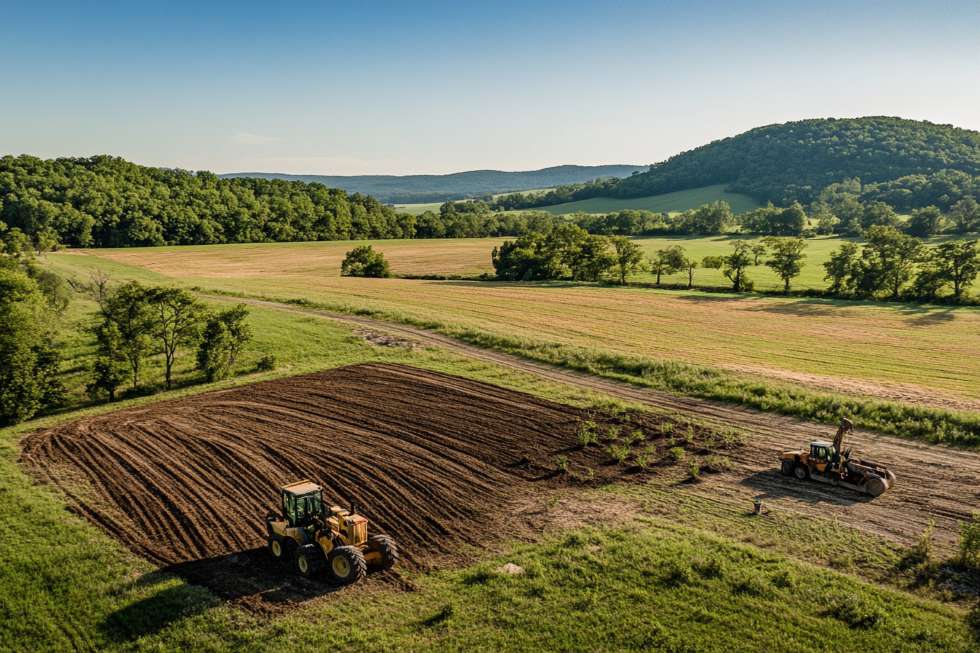

Aerial view of a large farm with plowed fields and tractors
Farm Landscaping Series

Landscaping Guides for Working Farms and Rural Land

Soil that stays put, fields that drain, and grounds people want to gather on. Every guide here is written for acreage, not a quarter-acre lot.

Farm field showing soil erosion after rain
Why It Matters

Farm landscaping is land management with a better view

On a farm, the landscape is not decoration. Tree lines block wind, grass strips slow runoff, and graded paths keep equipment moving after a storm. Get those basics right and the beauty tends to follow on its own.

Common Questions
01

Protect the topsoil

Cover crops, contour planting, and terraces keep your most valuable layer from washing downhill.

02

Move water on purpose

Swales, berms, and tile drainage send heavy rain where you want it instead of across the field.

03

Plant for shelter

Windbreaks and shade trees cut wind stress on crops, livestock, and anyone standing outside.

04

Make the grounds usable

Firm lawns, safe paths, and open views turn a working property into a place people want to visit.

Farm Landscaping FAQ

Questions farm owners ask before they dig

What counts as farm landscaping?
It covers anything that shapes how your land looks and works: windbreaks, grass buffers, drainage swales, field borders, driveways, and the grounds around the house and barns. On a farm, most landscaping does a job first and looks good second.
How do I stop soil erosion on a large farm?
Start with ground cover. Cover crops, grassed waterways, and planting along the contour slow water down. On steeper ground, terraces and berms do the heavy lifting, and good drainage keeps fields from saturating during big storms.
Which plants work best on farm slopes and windbreaks?
Deep rooted grasses like switchgrass and fescue hold slopes well. For windbreaks, a mix of evergreens and hardy deciduous trees gives year round protection. Native species usually need the least care because they already fit your soil and climate.
What makes a farm landscape good for events and weddings?
Open views, mature shade trees, and firm, well drained lawns matter most. Guests also need safe paths, a covered backup space, and parking that does not turn to mud after rain.
How often should erosion controls be checked?
Walk your terraces, berms, and ditches at least twice a year and again after any heavy storm. Clear debris from culverts, replant bare spots, and fix small washouts before they grow into gullies.
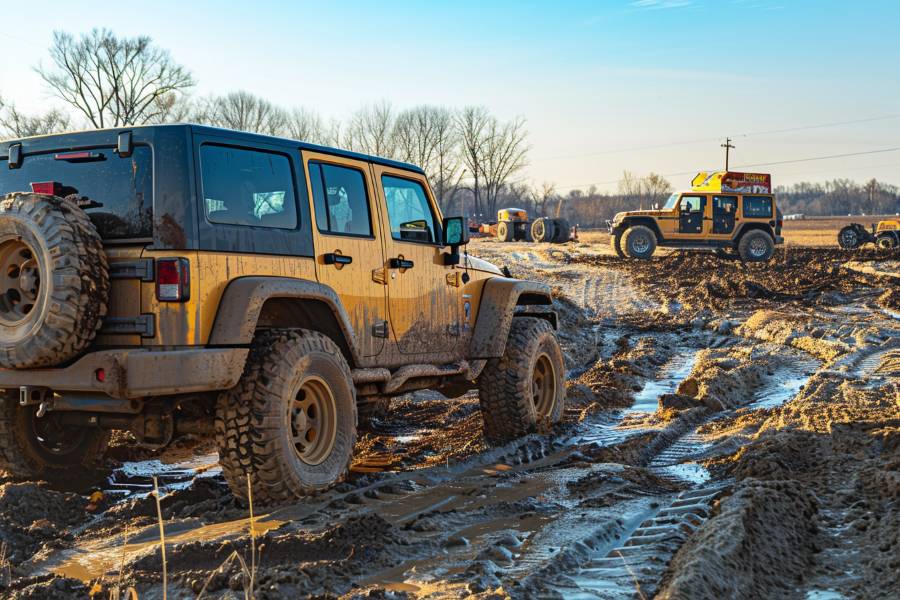
Work vehicles crossing a muddy farm field
Beyond the Fields

Ready to plan the rest of the property?

From the yard by the farmhouse to the garden out back, the rest of our library covers plants, materials, and design basics you can use anywhere on your land.