Why Low-Maintenance Landscaping Matters for Property Managers
Property managers often work under tight budgets and time constraints. One of the most effective ways to alleviate stress while managing a property is by implementing landscaping solutions that require minimal upkeep. Low-maintenance landscaping not only removes one of the top issues, but it also saves time and lowers maintenance costs, making it an ideal choice for any property manager.
The Cost of Traditional Landscaping Maintenance
Maintaining traditional landscaping often involves regular mowing, fertilizing, and seasonal planting, which can be both time-consuming and expensive. According to the National Association of Landscape Professionals, lawn care alone costs U.S. homeowners over $2 billion annually. Property managers can save significantly by opting for landscaping that requires less attention.
It helps to see where the money actually goes. A turf-heavy common area typically carries four recurring line items: weekly or biweekly mowing and edging during the growing season, three to four fertilizer and pre-emergent applications a year, overseeding or sod patching where foot traffic kills the grass, and irrigation repairs after heads get clipped by a mower. Each one is small on its own, but together they can account for more scheduled vendor visits than every other exterior task combined. Converting even a third of that turf to planting beds and hardscape removes most of those visits permanently rather than just making them cheaper.
By choosing the right plants, hardscaping materials, and efficient watering systems, property managers can enjoy beautiful outdoor spaces that don't require constant upkeep. This approach helps create more attractive, tenant-friendly properties, while also reducing the strain on resources.
Selecting Low-Maintenance Plants for Your Property
Plants are a major part of any landscape, and choosing the right ones is essential for minimizing maintenance. Native, drought-resistant plants are an excellent option for property managers who want to reduce the time spent watering, pruning, and replanting.
Native Plants: A Sustainable Choice
Native plants are not only environmentally friendly but also require less care. They are adapted to the local climate, soil, and weather conditions, meaning they need less water and fertilizer. Native plants also attract local wildlife, promoting biodiversity and contributing to a sustainable ecosystem.
Examples of Low-Maintenance Native Plants:
- Lavender: Drought-tolerant and fragrant, perfect for Arizona's climate.
- Agave: A hardy plant that requires minimal watering and maintenance.
- Red Yucca: A vibrant, drought-resistant plant that thrives with little care.
The single biggest mistake in multifamily planting beds is spacing shrubs for how they look on install day instead of how wide they get in five years. A plant that matures at four feet across should go in on four-foot centers, even though the bed will look sparse for the first two seasons. Crowded beds force quarterly shearing, which is exactly the recurring labor you were trying to avoid, and sheared shrubs rarely flower. Fill the temporary gaps with three inches of mulch or a short-lived groundcover rather than with extra shrubs.
By selecting plants that are suited to your climate and soil, property managers can reduce the frequency of replacements and the overall cost of maintenance.
Xeriscaping: A Water-Saving Landscaping Solution
In addition to choosing native plants, xeriscaping is another effective strategy for low-maintenance landscaping. This method focuses on using drought-tolerant plants and minimizing water usage, making it ideal for properties in arid climates like Arizona. According to the University of Arizona, xeriscaping can reduce water use by up to 50%.
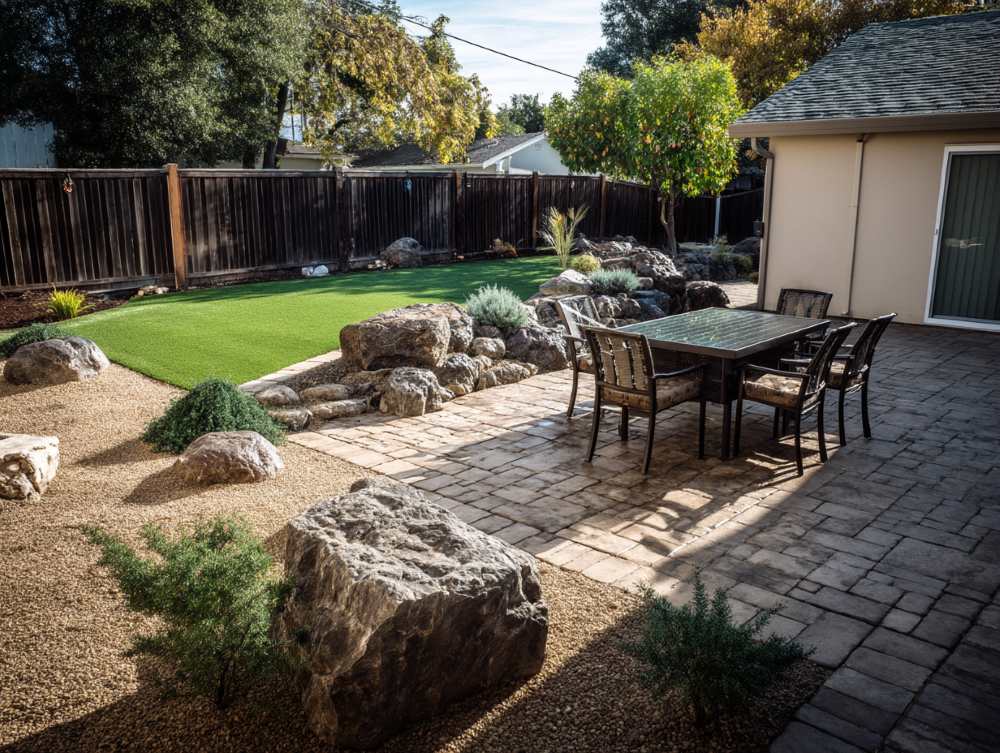
Done well, xeriscaping is zoned rather than uniform. Put the small amount of thirstier, higher-interest planting right at the entry monument and leasing office where residents and prospects actually look, then step down to tougher, unirrigated material along property lines, utility easements, and back fence lines where nobody lingers. Under the gravel or decomposed granite, use a permeable weed fabric and keep rock depth at two to three inches; thinner than that and weed seed germinates straight through, which turns a "no-maintenance" rock field into a monthly spraying obligation.
By eliminating grass lawns and incorporating stones, mulch, and drought-tolerant plants, property managers can create beautiful outdoor spaces with minimal irrigation.
Incorporating Hardscaping into Your Low-Maintenance Landscape
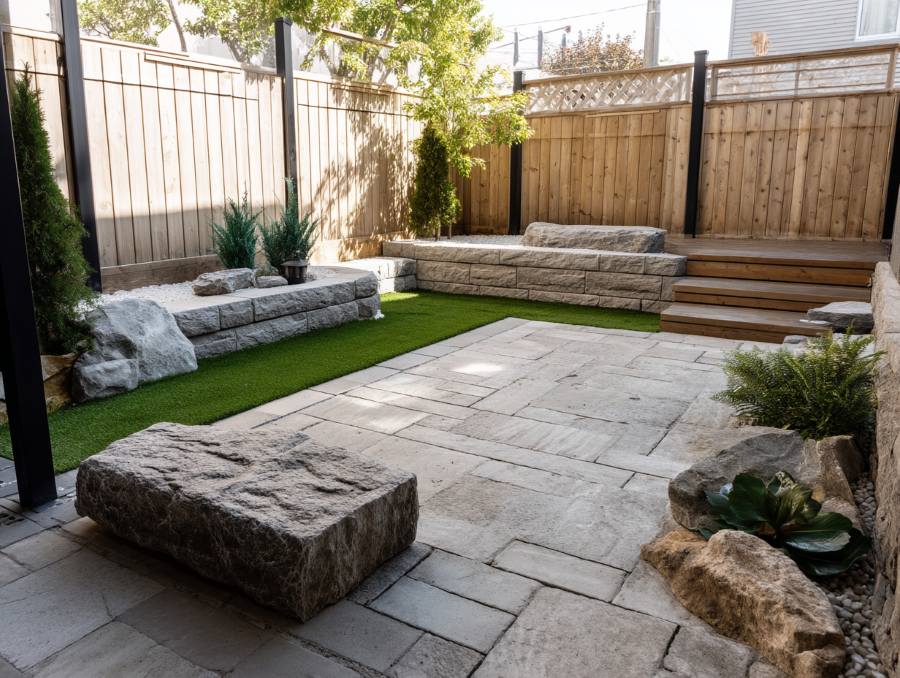
Hardscaping refers to the non-plant elements of landscaping, such as paths, patios, walls, and driveways. These elements require very little maintenance compared to plants and can significantly enhance the functionality and aesthetic of a property.
Why Hardscaping Works for Property Managers
Hardscaping materials are often durable and easy to maintain, which is why they are a go-to solution for property managers looking to simplify upkeep. Materials like stone, brick, and concrete are resistant to weather conditions and pests, making them perfect for long-lasting outdoor spaces. Adding decorative elements like retaining walls or outdoor fire pits can also boost property value.
Popular Hardscaping Features:
- Paver Paths: Durable, low-maintenance walkways that add visual appeal.
- Retaining Walls: Functional and stylish for sloped properties.
- Stone Patios: Perfect for outdoor entertaining with minimal upkeep.
Hardscape is low-maintenance, not no-maintenance, and the failures are predictable. Pavers settle when the base was compacted too thin, so insist on a properly compacted aggregate base and polymeric sand in the joints rather than plain sand that washes out in the first monsoon. Segmental retaining walls over about three feet usually need engineering, drainage gravel behind the face, and a drain line at the base; skipping that is how walls bow outward three winters later. Build the paths at least four feet wide so maintenance carts and strollers pass without anyone cutting the corner and wearing a dirt track through the adjacent bed.
Incorporating these elements reduces the need for frequent plant replacements and allows for easy maintenance. The right hardscaping can provide a modern, clean look that complements your landscape and minimizes the need for constant attention.
Efficient Irrigation Systems for Low-Maintenance Landscaping
Watering plants efficiently is one of the most important aspects of landscaping maintenance. Traditional sprinkler systems often waste water and require regular adjustments. However, modern irrigation systems offer smarter, more efficient solutions that save both time and water.
Drip Irrigation: A Water-Saving Solution
Drip irrigation systems deliver water directly to the roots of plants, reducing water waste and ensuring that plants receive the right amount of hydration. This system requires minimal maintenance and is highly efficient, making it a perfect choice for low-maintenance landscaping.
Advantages of Drip Irrigation:
- Water Conservation: Directs water to plant roots, preventing runoff.
- Time-Saving: Requires fewer adjustments and less monitoring.
- Cost-Effective: Reduces water bills over time.
A few hardware choices decide whether drip stays maintenance-free. Install a filter and a pressure regulator at the valve, since emitters clog fast on unfiltered municipal or well water and blow apart above their rated pressure. Use pressure-compensating emitters on any run that climbs a slope, and move emitters outward as plants mature so water lands at the drip line instead of the original root ball. Pair the system with a WiFi-enabled smart controller that adjusts to local weather data and shuts off during rain; a controller that emails the manager when a zone draws no current will catch a cut lateral in a day rather than at the next water bill.
Property managers can install a drip irrigation system to ensure their landscaping remains healthy without needing constant attention or wasting water.
A Simple Seasonal Checklist
Low-maintenance does not mean unattended, it means predictable. Most converted landscapes run fine on four visits a year: a spring walk-through of every valve and emitter, a summer check for clogged heads and heat-stressed plants, a fall pruning and mulch top-up, and a winter controller reprogram with a backflow inspection. Writing those four dates into the annual budget keeps small problems from turning into plant replacement orders.
Low-Maintenance Landscaping for Multi-Property Managers
For property managers who oversee multiple properties, low-maintenance landscaping becomes even more critical. The key is consistency and finding solutions that work across various properties without compromising on aesthetic appeal.
Customizing Landscapes for Different Property Types
Whether managing residential complexes, commercial properties, or mixed-use spaces, property managers can adapt low-maintenance landscaping techniques to fit each property’s unique needs. For example, installing drought-tolerant plants at one location while using hardscaping at another can provide variety without increasing upkeep requirements.
Standardizing the parts list across a portfolio is what makes this scalable: one approved plant palette of eight to twelve species, one paver and one mulch product, one controller brand, and one emitter size. When every site uses the same components, a tech can carry a single repair kit in the truck, crews stop guessing, and bulk pricing improves on replacements.
“The properties that stay easy are the ones where somebody wrote down what was installed,” says Marcus Delgado, field operations lead at Handy Squad Home Services. “We show up at a site with four different controller brands and three mulch colors because every manager made their own call, and a fifteen-minute fix becomes a half-day trip to the supply house.” A one-page spec sheet listing plant names, emitter sizes, and paver colors is the first thing his team asks for when picking up Handy Squad Home Services at a property someone else built out.
In a recent interview with Action Property Management in Scottsdale, they shared their experience with multi-property managers: "By selecting durable, low-maintenance materials and plants, we've been able to simplify landscaping tasks, allowing property managers to focus on other aspects of their job, while ensuring long-term savings.
Creating Low-Maintenance Outdoor Spaces for Tenants
Attracting and retaining tenants is often a priority for property managers. An inviting, well-maintained outdoor space can make a huge difference in tenant satisfaction and overall property value.
Outdoor Living Spaces That Require Minimal Care
Outdoor living spaces, such as patios, decks, and garden areas, are desirable to tenants but can become high-maintenance if not planned properly. By choosing materials and designs that require little upkeep, property managers can create enjoyable outdoor spaces for tenants while reducing long-term maintenance costs.
Ideas for Low-Maintenance Outdoor Spaces:
- Artificial Turf: Looks great without the need for mowing or watering.
- Modular Furniture: Easy to rearrange and low-maintenance.
- Fire Pits: Create cozy, low-maintenance gathering spots.
Match the material to the behavior you expect. Artificial turf is excellent in dog runs and shaded courtyards, but dark infill in full sun gets uncomfortably hot, and pet areas need an antimicrobial infill plus a monthly rinse to stay odor-free. Choose powder-coated aluminum or HDPE furniture over wood and wicker, which need refinishing and lose a few pieces to weather every year. Composite decking over wood eliminates annual sealing, and gas fire pits avoid the ash cleanup and burn-ban headaches that come with wood-burning versions.
These features help tenants enjoy the outdoors without worrying about excessive upkeep, enhancing their overall living experience.
Nothing But Benefits of Low-Maintenance Landscaping
In today’s fast-paced world, property managers are constantly seeking ways to reduce time spent on maintenance without sacrificing quality or appeal. Low-maintenance landscaping offers an excellent solution that enhances the look of a property, reduces costs, and saves time.
By implementing strategic design choices like drought-tolerant plants, efficient irrigation, and hardscaping, property managers can enjoy the benefits of a beautiful and easy-to-manage outdoor space. Low-maintenance landscaping not only helps manage property upkeep more efficiently but also creates an environment where tenants can thrive.
How will you implement low-maintenance landscaping strategies at your property to reduce costs and enhance tenant satisfaction?